Welcome to maconsnakes.com! I am David, a snake enthusiast living in Macon, GA. Many people don't know that Macon is in fact full of snakes! You just need to know where to find them - they can often be shy and elusive. Some Georgia snake species are more common outside of the city limits, in different parts of Bibb County GA, but many types of snakes are indeed common in the more urban parts of Macon. This guide is meant to help educate you about the beautiful snakes of Macon, and to help you identify the most common snakes of Macon, as well as the venomous snakes of Macon that you should learn to recognize and avoid. If you want more detail, click here for my complete list of ALL snake species in Macon. Remember the following:
- Most snakes of Macon are harmless and don't want to encounter you
- Venomous snakes exist but are uncommon in Macon, Georgia
- Snakes eat rats and mice and are a valuable part of the Georgia ecosystem
- Never kill a snake - if you leave a snake alone, it will leave you alone.
Common Snake Species in Macon
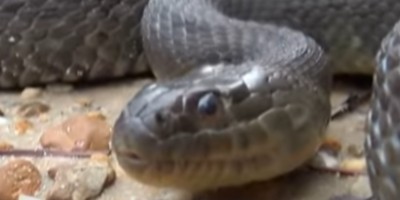 Eastern Green Watersnake:
The eastern green watersnake (Nerodia cyclopion) is a very common type of mostly aquatic snake that can be found across the US. The eastern green watersnake is fairly large and heavy, with the average adult growing up to 55 inches (or 140 cm) in length. Its heavy body makes it stand out, but the water snake can become easily camouflaged thanks to its dark earthy, or olive green colors. It has a yellow underside and multiple rings under the eyes. It usually lives near water and its diet consists mainly of crayfish, frogs, and other fish.
Eastern Green Watersnake:
The eastern green watersnake (Nerodia cyclopion) is a very common type of mostly aquatic snake that can be found across the US. The eastern green watersnake is fairly large and heavy, with the average adult growing up to 55 inches (or 140 cm) in length. Its heavy body makes it stand out, but the water snake can become easily camouflaged thanks to its dark earthy, or olive green colors. It has a yellow underside and multiple rings under the eyes. It usually lives near water and its diet consists mainly of crayfish, frogs, and other fish.
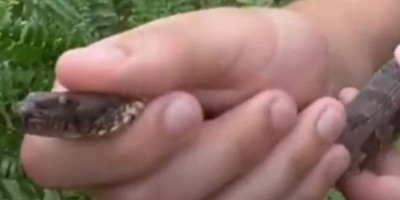 Brown Watersnake:
The brown water snake, or the Nerodia taxispilota, is a large type of non-venomous aquatic snake. It is easily distinguished by its heavy body and by the fact that its neck is visibly narrower than its body. It’s usually brown or rusty brown in color and marked by darker, square blotches on its back. It usually grows up to 60 inches in length or roughly 150 cm. The brown water snake, true to its name, lives mostly in watery areas, predominantly streams and swamps.
Brown Watersnake:
The brown water snake, or the Nerodia taxispilota, is a large type of non-venomous aquatic snake. It is easily distinguished by its heavy body and by the fact that its neck is visibly narrower than its body. It’s usually brown or rusty brown in color and marked by darker, square blotches on its back. It usually grows up to 60 inches in length or roughly 150 cm. The brown water snake, true to its name, lives mostly in watery areas, predominantly streams and swamps.
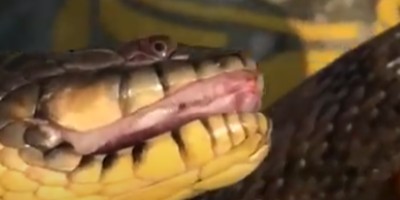 Plain-bellied Watersnake:
The plain-bellied watersnake (Nerodia erythrogaster) is a common type of non-venomous aquatic snake to be found in Georgia. Its body is large and thick and usually has a uniform color, ranging from black to greenish-gray to olive green. Its underside is unmarked, hence the name, and tends to be yellow or red. This watersnake can grow up to 4 inches (roughly 120 cm.) in length. It lives near water and mostly feeds with related prey, such as various types of fish.
Plain-bellied Watersnake:
The plain-bellied watersnake (Nerodia erythrogaster) is a common type of non-venomous aquatic snake to be found in Georgia. Its body is large and thick and usually has a uniform color, ranging from black to greenish-gray to olive green. Its underside is unmarked, hence the name, and tends to be yellow or red. This watersnake can grow up to 4 inches (roughly 120 cm.) in length. It lives near water and mostly feeds with related prey, such as various types of fish.
 Banded Watersnake:
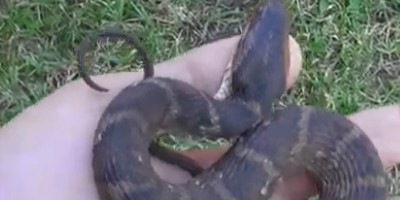
The banded water snake (Nerodia fasciata) is an aquatic, non-venomous type of snake that grows up to about 40 inches (120 cm) and has a gray or brown-colored body. It has dark crossbands, though those can be difficult to see in some cases. The banded water snake is distinguished by its flat head and often mistaken for the venomous cottonmouth.
Banded Watersnake:
The banded water snake (Nerodia fasciata) is an aquatic, non-venomous type of snake that grows up to about 40 inches (120 cm) and has a gray or brown-colored body. It has dark crossbands, though those can be difficult to see in some cases. The banded water snake is distinguished by its flat head and often mistaken for the venomous cottonmouth.
Venomous Snake Species in Macon
 Cottonmouth:
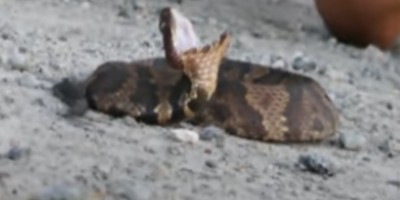
The cottonmouth, known also by its more official name Agkistrodon piscivorus leucostoma, is also informally referred to as the water moccasin, thanks to its proclivity toward watery areas (e.g. swamps, lakes, etc.). It is a fairly small type of pit viper, with adults only measuring about 27 inches (70 cm). Its color tends to be a dark brownish-gray that darkens as the serpent ages (really old cottonmouths have been known to be entirely black). It bears dark crossbands and will gape its mouth to threaten you if it feels endangered.
Cottonmouth:
The cottonmouth, known also by its more official name Agkistrodon piscivorus leucostoma, is also informally referred to as the water moccasin, thanks to its proclivity toward watery areas (e.g. swamps, lakes, etc.). It is a fairly small type of pit viper, with adults only measuring about 27 inches (70 cm). Its color tends to be a dark brownish-gray that darkens as the serpent ages (really old cottonmouths have been known to be entirely black). It bears dark crossbands and will gape its mouth to threaten you if it feels endangered.
 Eastern Diamondback Rattlesnake:
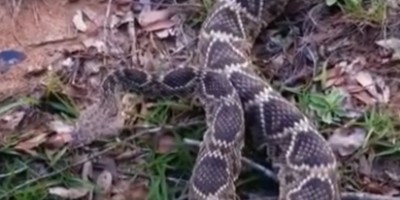
The eastern diamondback rattlesnake (Crotalus adamanteus) is a venomous pit viper you may encounter throughout the state of Georgia. Its impressive size and weight make it easily stand out - the adult can grow up to 8 feet (2.4 m) and weigh up to 34 lbs. (15 kg)! The eastern diamondback rattlesnake usually has a dark shade of brown as its base color and black diamonds with light centers. It prefers woodland, pine-wood areas, and feeds on small mammals. Contrary to popular belief, the rattlesnake won’t necessarily rattle before striking - so beware!
Eastern Diamondback Rattlesnake:
The eastern diamondback rattlesnake (Crotalus adamanteus) is a venomous pit viper you may encounter throughout the state of Georgia. Its impressive size and weight make it easily stand out - the adult can grow up to 8 feet (2.4 m) and weigh up to 34 lbs. (15 kg)! The eastern diamondback rattlesnake usually has a dark shade of brown as its base color and black diamonds with light centers. It prefers woodland, pine-wood areas, and feeds on small mammals. Contrary to popular belief, the rattlesnake won’t necessarily rattle before striking - so beware!
 Eastern Coral Snake:
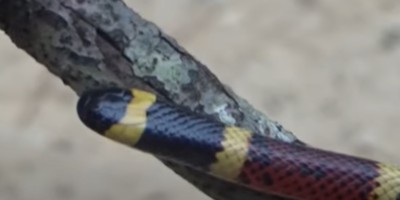
Officially referred to as Micrurus fulvius, the eastern coral snake is a small, yet highly venomous type of serpent. The average adult usually measures about 31 inches (or 80 cm) overall. It’s easily distinguishable thanks to its unusual coloring pattern, which consists of dark reddish circles around the body, separated by bright yellow ones. It can mostly be found in dry, bushy areas around Georgia. While its neurotoxic venom is dangerous, fatalities are fairly rare. Its diet consists mainly of lizards and small mammals.
Eastern Coral Snake:
Officially referred to as Micrurus fulvius, the eastern coral snake is a small, yet highly venomous type of serpent. The average adult usually measures about 31 inches (or 80 cm) overall. It’s easily distinguishable thanks to its unusual coloring pattern, which consists of dark reddish circles around the body, separated by bright yellow ones. It can mostly be found in dry, bushy areas around Georgia. While its neurotoxic venom is dangerous, fatalities are fairly rare. Its diet consists mainly of lizards and small mammals.
If you're unsure, you can email me a photo of the snake at info@maconsnakes.com and I will email you back with the snake's species. If you found a snake skin, read my Found a Skin? page, and you can email me a photo of the skin, and I'll identify the snake for you. If you need professional Macon snake removal help, click my Get Help page, or see the below website sponsor I found, who provides that service.
Remember, the term is not poisonous snakes of Macon, it's venomous snakes of Macon. Poison is generally something you eat, and venom is injected into you. That said, dangerous snakes are very rare in Macon. The few venomous snakes of Bibb County are rarely seen. But they are commonly misidentified, so learn about all the snake species of Macon in order to correctly identify them. These snakes are usually also found in the surrounding towns of Angels Acres, Anthony Terrace, Arkwright, Arlington Park, Aultman Pines, Avondale, Castlegate, Cherokee, Christian Rest, Christophers Cove, Clarkview, College Estates, Country Club Estates, Forest Lake, Riverside Hills, Riverside Park, Riverview, Rivoli Plantation, Rogers Acres, Rutland, Sanders, Sardis Estates, Shadowood, Sherwood Forest, Shirley Hills, Shirlington, Silver Pines, Skipperton, Smithsonia, Sofkee Estates, South Highlands, Storeyland, Stratford Oaks, Stratton, Sunnydale Acres, Village Green, Whitehouse Plantation, Wimbish Hills, Wimbish Wood, Wimbledon Woods, Wood Valley, Woodcrest and the surrounding areas.
Read our article about:
Your Complete Guide on Pigmy Rattlesnake
maconsnakes.com domain and hosting costs made possible by the generous support of this sponsor: